China's space program continues its rapid expansion, marked by both impressive achievements and a few concerning developments. The return of the Shenzhou-20 crew after a record-breaking 204 days in space should be a moment of pure triumph, but the mission's premature conclusion and the discovery of damage raise uncomfortable questions.
The Shenzhou-20 mission, carrying Chen Dong, Wang Jie, and Chen Zhongrui, was lauded for its four extravehicular activities (EVAs), primarily focused on installing additional protection against space debris. This detail, however, becomes ironic given the subsequent revelation that the spacecraft sustained damage – a fine crack on one of its windows, to be exact. While officials downplay the severity, the decision to bring the crew home early aboard Shenzhou-21 suggests a level of concern not reflected in the official statements.
Commander Chen Dong now holds the Chinese record for accumulated time in space: 418 days across three missions. That's a significant achievement, but is it being used to distract from the less-than-ideal ending of Shenzhou-20? The spacecraft will remain attached to Tiangong as an emergency lifeboat. Given the station's "sufficient supplies and life-support margin to host six crew members for several weeks," one has to wonder if the lifeboat is a precaution against a more serious, but unacknowledged, risk.
The upcoming uncrewed Shenzhou-22 mission on November 25th is another interesting data point. This will be the first uncrewed launch of a Shenzhou spacecraft since 2011. Is this a routine resupply mission, or a quiet test flight after the Shenzhou-20 incident? Details are scarce, but the timing is certainly noteworthy.
China's ambitions extend beyond LEO. The Mengzhou capsule, a next-generation spacecraft designed for lunar missions, is undergoing rigorous testing, with its first uncrewed flight slated for next year. The Chang Zheng 10A (CZ-10A) rocket, specifically designed to launch the Mengzhou, has completed static fire campaigns. This is where I find the narrative diverges from the data. While the official line emphasizes lunar exploration, the focus on in-flight abort testing for Mengzhou hints at a more immediate concern: crew safety. Are they really confident, or are they just posturing?
On the lunar science front, the Chang’e 6 mission's discovery of hematite and maghemite ("rust") in lunar samples is intriguing. The Chang’e 7 mission, planned for mid-2026, aims to search for water ice near Shackleton crater. These missions are part of the reconnaissance phase for the International Lunar Research Station, which China leads. But given the technical challenges and the geopolitical landscape (the US is also aggressively pursuing lunar resources), the ILRS seems more like a long-term aspiration than a concrete plan.
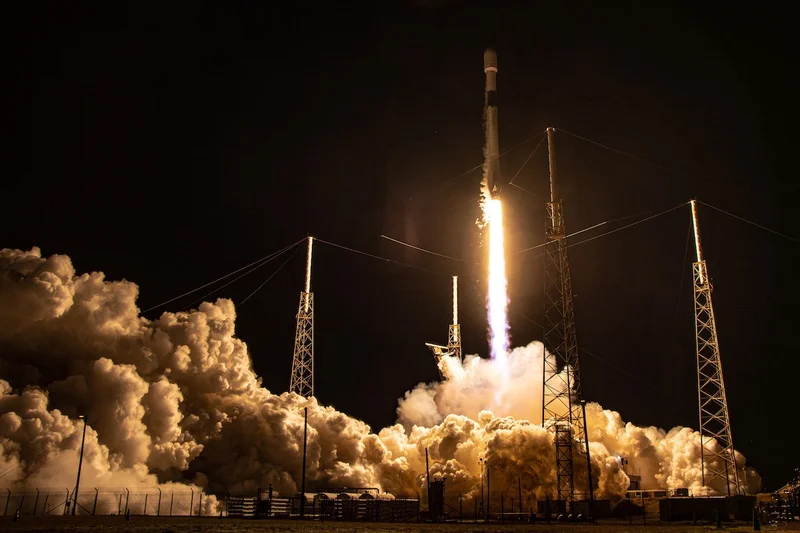
The commercial space sector in China is also experiencing rapid growth. Deep Blue Aerospace, Galactic Energy, iSpace, OrienSpace, Space Pioneer, and CAS Space are all developing and testing new rocket engines and infrastructure. Landspace's ZhuQue-3 debut has slipped to November, but the sheer number of active players indicates a vibrant and competitive market. CAS Space plans a reusable variant of the Lijian-2 by 2028. This push toward reusability is clearly aimed at competing with SpaceX.
Recent launches have been a mixed bag. A Chang Zheng 11H launched successfully, as did CAS Space's Lijian-1. However, Galactic Energy’s Jilin-1 experienced a premature shutdown, failing to deploy its payloads. These failures, while not uncommon in the space industry, highlight the risks inherent in rapid expansion and technological innovation.
The Shenzhou-12 mission introduced a crucial safety measure: a second Chang Zheng 2F vehicle prepared on standby for all crewed launches. This redundancy underscores the inherent risks of spaceflight, risks that are often downplayed in official pronouncements.
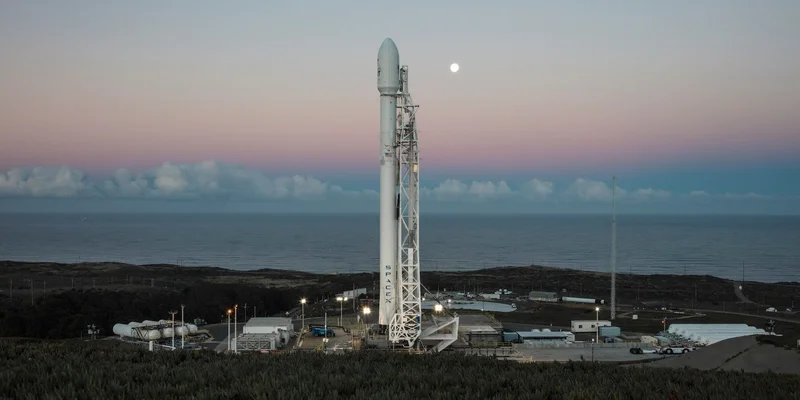
The claim that Tianlong-3 is similar in size, design, and payload capacity to SpaceX’s Falcon 9 is a common comparison, but it needs to be taken with a grain of salt. While the external dimensions may be similar, the Falcon 9's demonstrated reliability and reusability give it a significant advantage.
The planned inclusion of a Pakistani astronaut on the Shenzhou-24 launch in October 2026 is a clear signal of China's growing international partnerships. But it's also worth noting that this is a short stay on the Tiangong station. Symbolism often outweighs substance in these endeavors.
China's space program is undoubtedly ambitious, but the Shenzhou-20 incident serves as a reminder that even the most meticulously planned missions can encounter unforeseen problems. The official narrative often glosses over these challenges, focusing instead on achievements and future aspirations. But the crack in the window of Shenzhou-20 may also represent a crack in the carefully constructed image of flawless progress.